What sustainability means in manufacturing
Sustainability in production is not a certificate on the wall. It is a series of engineering decisions: how much energy a process consumes, how much material ends up as waste and which chemicals enter the factory.
At VIAL Automation, those decisions guide our technology choices and system designs. European environmental legislation is tightening, and manufacturers are expected to reduce process chemicals and material waste in their assembly lines. Ultrasonic welding is often the most direct substitution path available. Here is why.
No consumables, no chemical waste
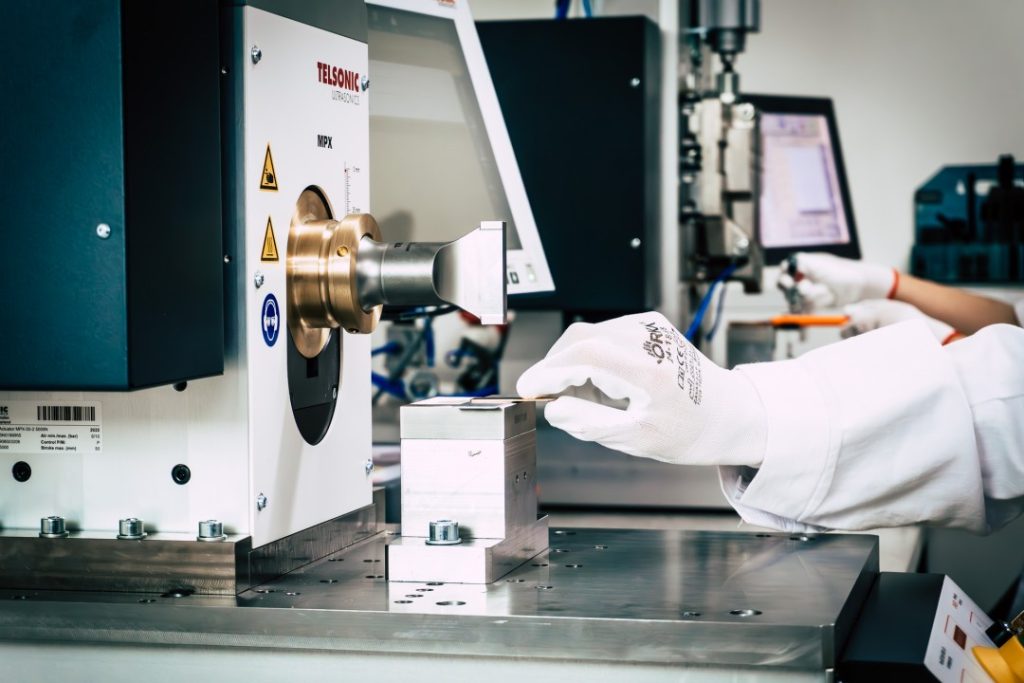
Ultrasonic welding joins thermoplastics and non-ferrous metals through high-frequency mechanical vibration, typically between 20 and 40 kHz. The bond is molecular in thermoplastics and metallurgical in metals. The process uses:
- no adhesives, so no mixing, curing time, fume extraction or hazardous waste disposal
- no screws or rivets, so no added mass and no hole preparation
- no filler material and no shielding gas
An order-of-magnitude difference in energy
Resistance welding requires high electrical current and consumable electrodes. Laser welding requires high-energy beam sources and shielding gas. Ultrasonic energy input per weld cycle is measured in joules, not watt-hours. Typical cycle times run from 0.1 to 3 seconds per weld.
Recyclability by design
Parts joined with adhesives enter the recycling stream as a contaminated composite. Ultrasonic-welded thermoplastic assemblies remain a single material type and can be recycled as the polymer they are.
Where this matters in practice
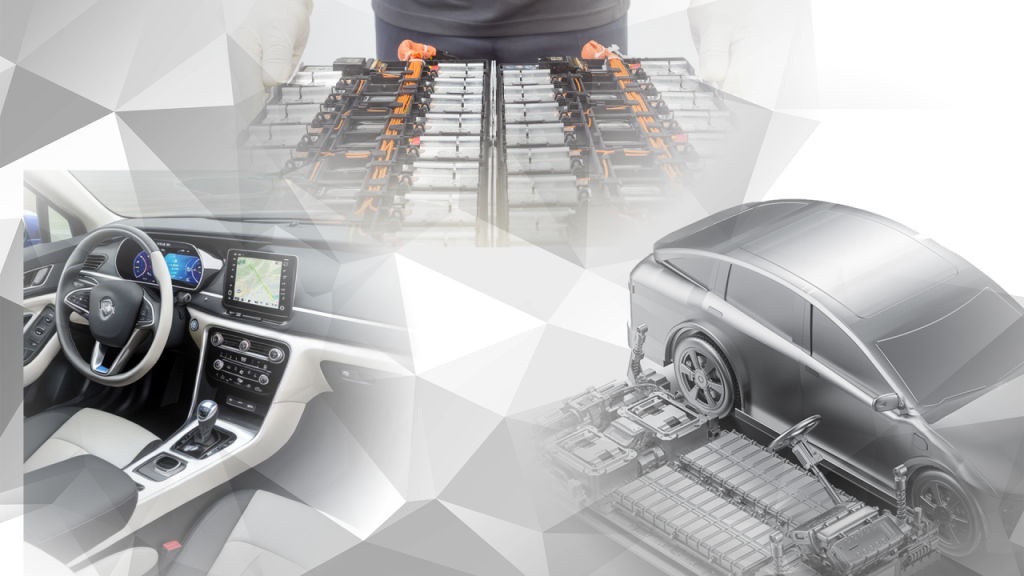
- Battery packs: welded busbar and foil-to-terminal connections reduce contact resistance compared to bolted joints and improve energy density.
- Automotive: welded plastic assemblies replace fastened ones, removing fastener mass that carries a lifetime fuel and CO₂ cost.
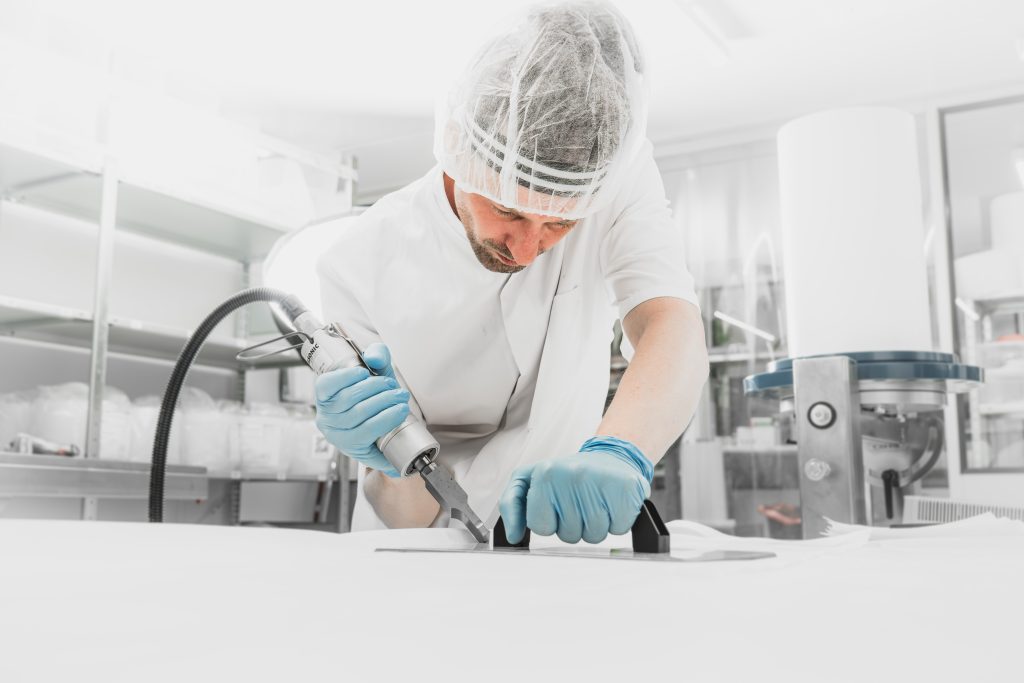
- Medical devices: joints produced in our ISO 8 cleanroom carry no adhesive outgassing and no flux residue.
- Every weld is logged per cycle: energy, force, displacement, time. Quality is a numerical record, not an assumption.
The honest caveat
Ultrasonic welding is not the answer for thermosets, heavily filled polymers or thick metal cross-sections. Whether it fits your application is a question our ultrasonic laboratory answers before you invest: send us a sample part and we run feasibility welds with a documented report.
[Book a feasibility test in our ultrasonic laboratory →]
We are here for you!
Ready to explore new opportunities? Contact us today to discuss your project requirements. Together, we can achieve precision, efficiency, and reliability in your manufacturing processes.
Follow us on social media: